- Creator economy
- Tippified
- Fintech
- Career
Tippified: tipping for creators, and why it could travel
I spent a year as a web development intern at Tippified. Here’s what the platform does, why I think it’s useful, and whether it could work in America.

On this page
From June 2025 to June 2026, I worked as a web development intern at Tippified. It was my first long stretch building for a live product that real people use and pay through every day. That year taught me a lot about shipping carefully, because when money moves through what you build, small mistakes matter.
But this post isn’t really about me. It’s about the platform, what it does, and why I think the idea behind it is bigger than it looks.
What Tippified is
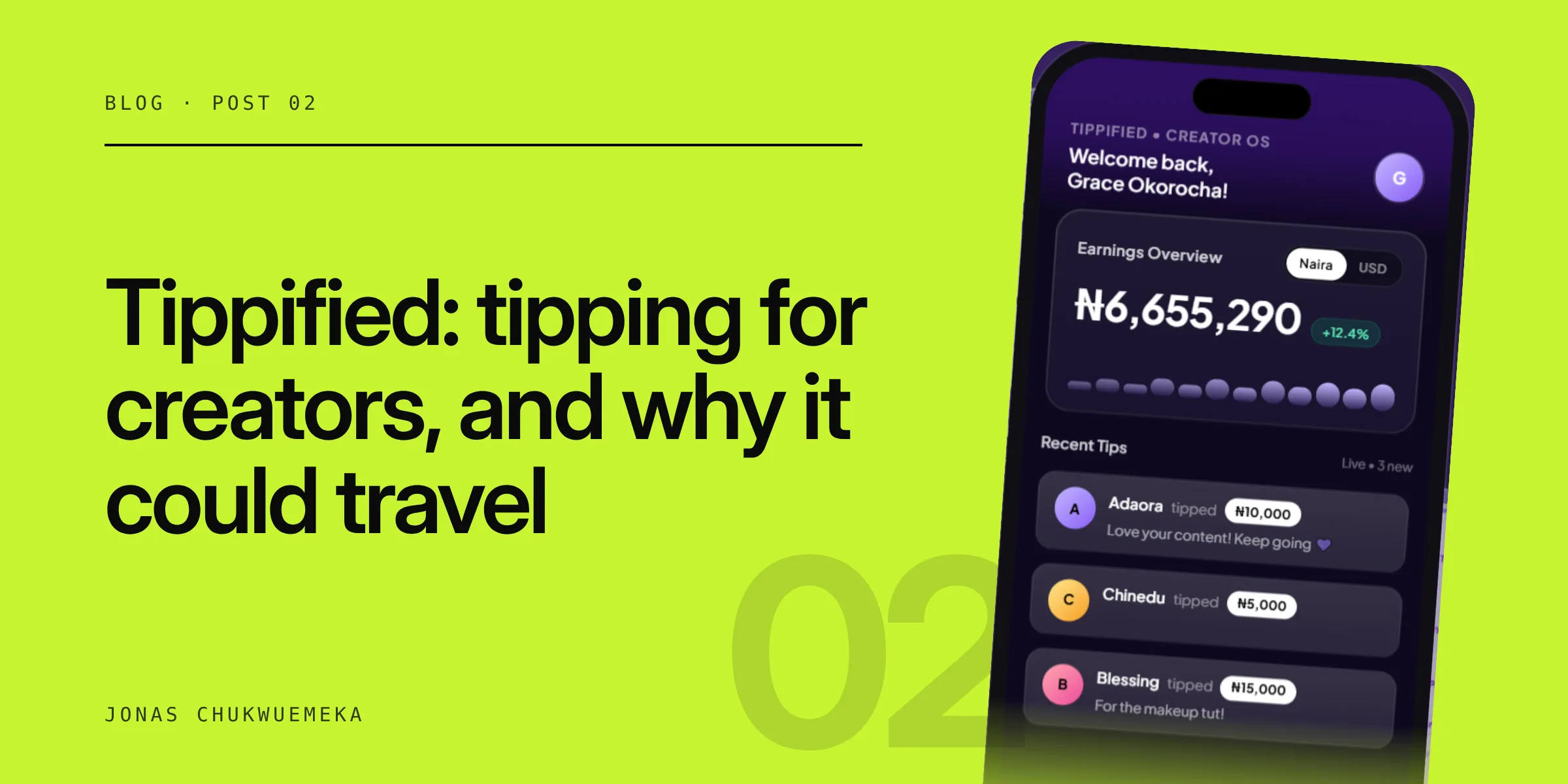
Tippified is a platform that lets fans support creators directly with money. It calls itself Africa’s all-in-one creator monetisation platform, and it’s built for Nigerian creators: musicians, skit makers, influencers, actors, dancers, podcasters, and anyone with an audience that likes their work.
The idea is simple. A creator gets one link. They share it with their fans. Fans use it to send support.
What fans can do on it
Tippified goes further than a basic “send money” button. Fans can:
Send a tip for something they enjoyed.
Send virtual gifts, which make the support feel more like a moment than a transaction.
Contribute to a goal, like new equipment or a project the creator is raising money for.
Support a live stream while it’s happening.
Buy something off a creator’s wishlist, for example on their birthday.
Unlock exclusive content the creator only shares with supporters.
Creators see everything in a dashboard, and their earnings are paid out to their bank account through Paystack.
Why I think it’s useful
It turns attention into income. Many Nigerian creators have huge audiences and very little income from them. Brand deals go to a few big names. Platform payouts are limited or unavailable for many creators here. Tippified lets a creator earn from the people who already watch them, without waiting for a brand to notice.
It fits how we already give. Nigerians don’t need to be taught to support people they like. We already do it. Tippified gives that habit a proper home online.
It’s one link. A creator doesn’t need a website or a store. They just share a link in their bio, their stories or their group chats.
It respects the fan. A tip is a choice. Nobody is forced to pay before they watch, and that keeps the relationship between creator and fan healthy.
Tipping in Nigeria vs tipping in America
In Nigeria, giving is personal
In Nigeria, tipping in shops and restaurants isn’t really a fixed rule. There’s no standard percentage. If a waiter was great, or someone helped you carry your load, you might “dash” them something, and they’ll be grateful, but it isn’t expected the way it is in some countries.
Where Nigerians really give is in moments of celebration and appreciation. Think of a party where guests spray money on the celebrant or the musician on stage. That giving is generous, public and emotional. It’s about showing love and respect, not settling a bill.
That’s exactly the energy Tippified taps into. Sending a gift to your favourite skit maker is closer to spraying a musician at a party than paying a service charge.
In America, tipping is expected, and people are tired of it
In the United States, tipping is a deep part of everyday life, and it has spread. In a 2023 Pew Research survey, 72% of American adults said tipping is expected in more places than it was five years before. Only about a third said it’s easy to know whether to tip or how much.
Americans also don’t like being pushed. 40% opposed businesses suggesting tip amounts, and 72% opposed automatic service charges added to the bill. Many now talk about “tip fatigue”: a screen asking for 20% when you buy a coffee.
So America tips a lot, but much of that tipping feels like an obligation.
Could Tippified grow in America?
I think it could, and here’s why.
Tipping creators feels different from tipping at a counter. American tip fatigue is mostly about service businesses asking for more. Tipping a creator is voluntary. You give because you want to, to someone whose work you already enjoy. That’s the kind of tipping people still feel good about.
The diaspora is a ready audience. Millions of Africans live in the US, UK and Canada, and many of them follow Nigerian creators every day. Tippified’s site already says it’s trusted by fans worldwide. A fan in Houston supporting a comedian in Lagos is a very natural first step for a platform like this to grow abroad.
Americans are already used to the idea. Tipping creators online isn’t strange in the US. Fans there already support creators on platforms like Patreon, Ko-fi and Buy Me a Coffee, and through gifts during live streams.
That last point is also the challenge. The American market is crowded. To win there, Tippified would need fast payouts in dollars, payment options Americans already trust, and a clear reason to choose it over tools people already use. I think its strongest reason is the one it already has: it’s built around how African fans and creators actually give, and that culture travels.
What I took from it
Working at Tippified showed me that good products often start with a habit people already have. Nigerians were always going to support the people they love. The question was whether someone would make that easy online. That’s a lesson I carry into everything I build now, including Weblanda.
You can see the platform at tippified.com.

Written by
Jonas Chukwuemeka
Full-stack developer and founder of Weblanda. I build web apps and online stores from Lagos, and I'm growing into data engineering.